Discover what it’s like to stay in Seville city centre: how the main barrios differ, walking distances to the cathedral and Alcázar, and practical tips for choosing the right central hotel for your trip.
Staying in Seville city centre: is it worth it?
Step out of your hotel and hear the bells of Seville Cathedral within minutes – that is the real advantage of sleeping in the city centre. For a first stay in Seville, especially if you have only two or three nights, the historic core is the most efficient and atmospheric base. You walk almost everywhere, from the Alcázar palace gardens to the orange-scented patios of Barrio Santa Cruz, without worrying about timetables or transfers.
The heart of the city is compact. From Plaza Nueva to the riverfront at Triana Bridge is barely 800 metres, which means that even a Seville hotel slightly off the main streets still feels central. This density brings energy, late-night tapas bars, and a constant hum of life. It also means narrow lanes, occasional noise, and streets where taxis cannot reach the door – a trade-off worth accepting if you want to feel the city rather than just visit Seville by day.
For most travellers looking for the best hotels in Seville, the centre is the obvious choice. It suits culture-focused visitors, couples on a short escape, and anyone who prefers to explore on foot rather than navigate buses or taxis. If you are planning day trips across Andalusia, the central location also keeps you reasonably close to Sevilla Santa Justa station without sacrificing the historic atmosphere that makes this part of Spain so compelling.
Understanding Seville’s central barrios
Turn off Avenida de la Constitución and you are in a maze of barrios, each with a distinct personality. Barrio Santa Cruz, the former Jewish quarter behind the cathedral, is the most famous and the most photographed. Whitewashed walls, tiny plazas shaded by jacaranda trees, and the constant glimpse of tiled patios make it a romantic choice, especially if you want a hotel in Seville that feels quintessentially Andalusian. The flip side is crowds and a steady flow of guided groups during the day.
North of the cathedral, the streets around Plaza del Salvador and Calle Sierpes form the commercial centro. Here, hotels in Seville tend to sit above arcaded shopping streets and traditional cafés, with easier vehicle access and a little more urban bustle. It is a practical base if you like to mix sightseeing with shopping, and if you prefer a grid of recognisable streets to the labyrinth of Barrio Santa Cruz.
Cross the Puente de Isabel II and Triana changes the tone. Technically just across the river from the strict city centre, this barrio feels local, ceramic workshops lining Calle San Jorge and tapas bars spilling onto Plaza del Altozano. Staying here suits travellers who want to visit Seville’s main sites by day, then retreat to a slightly quieter, more residential atmosphere at night. You trade a few extra minutes’ walk to the cathedral for a stronger sense of everyday Seville.
How central is “central”? Distances and orientation
From the steps of Seville Cathedral to Plaza de España in María Luisa Park, you walk about 20 minutes along Avenida de la Constitución and through the gardens. That single axis defines much of a classic stay in Seville: cathedral, Alcázar palace, Archivo de Indias, then the grand pavilions of the 1929 Exposición Iberoamericana. Choosing a hotel along or just off this line keeps most of the city’s major sites within easy reach.
Plaza Nueva, with its tram line and city hall, works as a mental compass. Hotels around this square place you between the river, the shopping streets of the centro, and the cathedral in a five-minute radius. Go north and you reach the Alameda de Hércules, a lively square that draws a younger crowd in the evenings; go south and you are on your way to the riverfront and Triana. The geography is legible, which makes short stays less stressful.
For travellers arriving by train, the distance from Sevilla Santa Justa station to the historic centre is roughly 2 km. A taxi to Plaza Nueva or the cathedral usually takes 10 to 15 minutes in normal traffic and costs around €8–€12, depending on time of day. Some properties sit closer to this axis, near Avenida de la Buhaira or the eastern edge of the centro, which can be convenient if you are planning several rail journeys across Andalusia. You gain easier access to the station and slightly wider streets, while still being a short taxi or tram ride from Plaza Nueva and the cathedral.
What to expect from hotels in Seville city centre
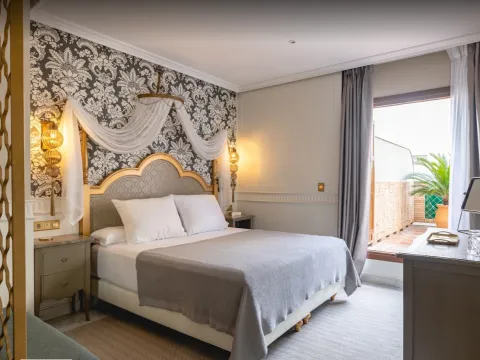
Behind many anonymous wooden doors in the centro hides a traditional Sevillian patio. This is the architectural heart of numerous hotels in Seville city centre: a tiled courtyard with a fountain, orange trees, and galleries leading to rooms above. Expect rooms that open onto interior patios rather than the street, which often means more calm but less direct city view. In summer, these shaded spaces become a refuge from the afternoon heat.
Room styles vary from classic Andalusian – think azulejo tiles, wrought-iron headboards, and heavy wooden shutters – to clean-lined contemporary design. In the streets around Plaza Nueva and the commercial centro, you will find more modern, vertical properties with efficient layouts and higher floors that may offer glimpses of the Giralda or the rooftops of Santa Cruz. In the older lanes, buildings are lower and more intimate, sometimes with roof terraces instead of balconies.
Many central properties make the most of their rooftops. Terraces with plunge pools or small solariums are common, especially near the cathedral and the Alcázar palace, where sunset views over the tiled roofs of Seville are part of the appeal. When you compare options, look carefully at room descriptions and floor plans: some rooms in historic buildings can be compact or irregularly shaped, while others open onto generous terraces or corner salons that transform the feel of your stay in Seville.
Choosing the right area for your travel style
Early risers and culture hunters usually gravitate towards the triangle formed by the cathedral, the Alcázar palace, and Plaza de España. From here, you can step out at opening time, reach the main sites before the tour groups, and retreat to your room for a siesta when the sun is high. If your priority is to visit Seville’s monuments with minimal effort, this is the most strategic zone. It is also where you feel the city’s tourist pulse most strongly.
Travellers who care more about evening atmosphere than proximity to a single monument often prefer the edges of the centro. Streets leading towards Triana, or the area between Plaza Nueva and the river, offer a good balance: close enough to walk home after dinner, far enough from the busiest lanes of Barrio Santa Cruz to feel more relaxed. Here, you are well placed for riverside strolls at dusk and for exploring tapas bars that cater as much to locals as to visitors.
If you are combining work and leisure, consider properties closer to the avenues that link the historic centre with Sevilla Santa Justa and the modern business districts. These hotels in the Seville centre often have slightly larger common areas, clearer access for taxis, and a more contemporary feel. You sacrifice the immediate charm of a palace courtyard in Barrio Santa Cruz, but you gain smoother logistics and a more predictable urban environment – a trade-off some travellers appreciate.
Practical checks before you book a Seville city centre hotel
Location descriptions in Seville can be poetic. Before you commit, look at the exact street: a hotel “near the cathedral” might be on a quiet alley behind Barrio Santa Cruz or on a busier artery off Plaza Nueva. Check walking times to the specific places that matter to you – Seville Cathedral, the Alcázar palace, Plaza de España, or the riverfront towards Triana – rather than relying on vague references to the city centre. Distances are short, but a few hundred metres can change the feel of your surroundings.
Historic buildings come with character and constraints. Some central properties have inward-facing rooms with limited natural light, while others offer spectacular roof terraces but smaller standard rooms. When comparing what is presented as the Seville best options for your dates, pay attention to room orientation, access to outdoor space, and whether the building opens onto a pedestrian lane or a broader street. This will influence both noise levels and how easy it is to arrive with luggage.
Finally, consider your rhythm. Night owls who plan to explore tapas bars around the centro and Triana may accept a livelier street in exchange for being in the middle of the action. Light sleepers might prefer a Seville hotel tucked deeper into a residential lane, even if it adds three or four minutes to the walk to Plaza Nueva. There is no single best area; there is only the right compromise between atmosphere, convenience, and the version of Seville you want to experience.
Who is Seville city centre best for?
First-time visitors to Spain, especially those tracing an Andalusia itinerary, benefit most from staying in the historic centro. You can arrive, drop your bags, and immediately walk to the cathedral, the Alcázar palace, and the river without learning a new transport system. For a short stay in Seville, this simplicity is invaluable. Couples, solo travellers, and culture-focused friends’ trips tend to find the city centre’s mix of plazas, churches, and tapas bars exactly right.
Families may want to look carefully at street layout and access. A casa-style property on a narrow lane in Barrio Santa Cruz can be magical, but pushing a stroller over cobblestones or calling taxis to a pedestrianised street is less so. In that case, the edges of the centro, closer to wider avenues or towards Triana, can offer a better balance between charm and practicality. You still reach Seville Cathedral and Plaza Nueva on foot, but everyday logistics are easier.
Repeat visitors or those seeking a quieter, more local feel sometimes choose just beyond the strict centre, near the river or towards the Alameda. They come into the core for specific visits – a concert near Plaza de España, a walk through Santa Cruz at dusk – then retreat to a neighbourhood where the rhythm is less dictated by sightseeing. If you already know Seville’s main sites, this can be the most rewarding way to recalibrate your relationship with the city.
Is Seville city centre a good place to stay?
Yes, Seville city centre is an excellent place to stay if you want to explore the main monuments on foot and immerse yourself in the historic atmosphere of the city. The cathedral, the Alcázar palace, Plaza Nueva, and the riverfront are all within a compact area, so you minimise transport and maximise time in the streets and plazas. It suits first-time visitors, culture-focused travellers, and anyone planning a short stay in Seville.
Which area of Seville city centre should I choose?
Choose Barrio Santa Cruz if you want a romantic, historic setting right by Seville Cathedral and the Alcázar, accepting more crowds and narrow lanes. Opt for the commercial centro around Plaza Nueva and Calle Sierpes if you prefer easier access, shopping streets, and a more urban feel. Consider staying near the river or towards Triana if you value a slightly quieter, more local atmosphere while remaining within walking distance of the main sites.
How far is Seville city centre from Sevilla Santa Justa station?
Seville city centre is roughly 2 km from Sevilla Santa Justa station, which usually means a short taxi ride or a 20 to 25 minute walk depending on your exact hotel location. Properties on the eastern edge of the centro, near avenues such as Avenida de la Buhaira, sit closer to the station, while those around the cathedral and Plaza Nueva are deeper in the historic core. For travellers planning several train journeys across Andalusia, staying slightly closer to this axis can simplify logistics.
Is it easy to walk between the main sites from a central hotel?
Yes, the main sites in Seville’s centre are within comfortable walking distance of each other. From the cathedral and the Alcázar palace to Plaza de España is about 20 minutes on foot, while the walk from Plaza Nueva to the Triana Bridge takes around 10 minutes. Choosing a hotel in or near the historic centro allows you to explore most of the city’s highlights without relying on public transport.
Who is better off staying outside Seville city centre?
Travellers who prioritise a very quiet environment, easier car access, or proximity to specific business districts may prefer to stay outside the historic centre. Areas beyond the compact core often have wider streets, more straightforward parking, and a less tourist-focused rhythm. If you already know the main monuments and are returning to Seville for work or longer-term stays, these neighbourhoods can offer a calmer, more residential base while you visit the city on your own terms.