From eco rhetoric to regenerative reality in Andalusia
Regenerative hospitality in Andalusia starts where conventional sustainable tourism stops. Instead of simply reducing impact, a truly regenerative hotel or eco lodge in this region aims to leave nature, local communities and cultural heritage in better shape after every guest stay. For business leisure travellers used to polished service, this shift reframes luxury as a way to restore life to landscapes, people and traditions rather than just extract from them.
Across Andalusia, the travel industry is quietly rethinking how tourism interacts with land, water and energy systems, and how hotels can become engines of regenerative tourism rather than symbols of mass tourism. A forward-thinking regenerative retreat with an eco philosophy does not only install solar energy panels or switch to renewable energy; it redesigns farming cycles, waste streams and guest experiences so that every euro spent supports local communities and strengthens local culture. This is where eco friendly ambitions evolve into regenerative travel commitments, and where eco luxury becomes less about organic cotton sheets and more about soil health, biodiversity and community resilience.
For travellers, the question is no longer whether a hotel is sustainable but how deeply regenerative its operations truly are. When you read a property description that promises sustainable travel, look for evidence of long term projects with local communities, not just offset schemes or recycled paper. The most interesting hotels in Andalusia now treat nature as a partner rather than a backdrop, inviting guests into a slower rhythm of travel that respects local customs and protects natural ecosystems year round.
Inside Finca La Donaira: where farm, lodge and spa converge
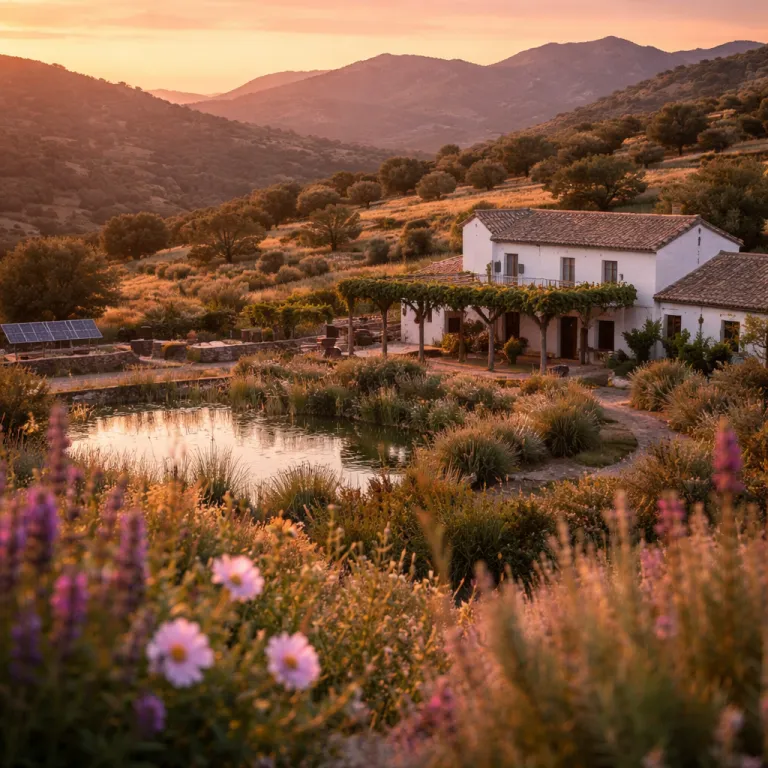
Finca La Donaira, set above the white village of Montecorto in the Serranía de Ronda, has become a reference point for regenerative tourism in Southern Spain. On its approximately 1,700 acres (around 690 hectares), as reported in the property’s own materials, this eco retreat operates as an organic farm, an intimate luxury lodge with just nine rooms, and a living laboratory for regenerative agriculture. The property shows how a regenerative hotel in Andalusia with an eco mindset can feel both rural and sophisticated without compromising on comfort for demanding guests.
The farming cycle underpins everything here, from the herd of Lusitano horses to the terraced vegetable gardens and olive groves that feed the seasonal menus. As co-founder Michael Baum has explained in interviews with European travel and lifestyle media, the aim is to create “a place where luxury and biodiversity grow together, not at each other’s expense.” Guests are invited to walk the fields with gardeners, join farm tours, or simply read in a hammock while watching the daily life of the finca unfold, which turns abstract ideas about sustainable tourism into tangible experiences.
Wellness is woven into the landscape rather than hidden in a basement spa. Treatments use natural ingredients grown on site, while the pool and yoga decks frame views of unspoilt nature and distant communities scattered across the hills. For those combining meetings in Málaga with leisure, it pairs well with a night or two in one of the spa hotels in Málaga for luxury wellness escapes, creating a travel arc from urban cultural intensity to rural eco lodge calm.
What guests actually experience at a regenerative eco lodge
Staying at Finca La Donaira feels different from a conventional luxury hotel long before you reach your room. The arrival sets the tone; there is no grand driveway or mass tourism bustle, just a discreet track through nature that ends at a cortijo style lodge where staff greet you by name and talk about the land before they mention the Wi Fi code. This is regenerative travel as lived experience, not marketing copy.
Daily rhythms follow the farm rather than a rigid service schedule, so breakfast might feature eggs collected that morning and vegetables harvested at dawn, while dinner menus change with the weather and the soil. Horseback rides trace old drovers’ paths, connecting guests to the cultural heritage of rural Andalusia and to the communities that once moved livestock across these hills. Many people find that the chance to read quietly in the library, join a permaculture workshop, or help in the gardens offers a deeper form of eco luxury than another infinity pool.
Crucially, the lodge team explains how renewable energy systems, water capture and composting work, turning the property into an informal classroom for sustainable travel. Guests leave understanding why solar energy powers the main buildings, how regenerative agriculture improves soil structure, and why supporting local communities through fair employment matters more than thread counts. For travellers used to private villas and premium stays in Andalusian villas, this kind of eco retreat offers comparable privacy with a far richer connection to place.
Beyond La Donaira: Andalusia’s emerging regenerative map
Finca La Donaira may be the headline act, but it is not alone in redefining what a regenerative hotel in Andalusia with an eco orientation can be. Across the region, a quiet network of hotels and eco lodges is experimenting with regenerative tourism models tailored to their own landscapes. The common thread is a commitment to nature, local culture and community benefit that goes beyond standard sustainable tourism checklists.
In the shadow of Sierra Nevada, for example, several small lodges near the national park work with local communities to restore terraces, replant native species and guide guests along lesser known trails. These properties use renewable energy where possible, limit car access, and design year round programmes that spread tourism income beyond the high season. On the Atlantic side, rural hotels near wetlands and coastal reserves are shifting from mass tourism packages to low impact stays that highlight birdlife, traditional fishing and local customs.
For travellers planning refined stays by the sea, even coastal properties in Marbella now face pressure to move from basic eco friendly gestures to more regenerative travel practices. Some are partnering with marine biologists, while others support dune restoration and plastic free initiatives, which makes a strong complement to curated beach stays in Marbella for refined seaside breaks. The direction of travel is clear; the most interesting hotels in Andalusia are those that treat luxury as a tool to regenerate landscapes and support people, not as an excuse to fence them off.
Can regenerative eco luxury scale across Andalusia’s hotel scene ?
Andalusia counts more than 700,000 tourist beds according to regional tourism statistics, a scale that raises hard questions about how far regenerative tourism can realistically go. A single regenerative hotel in Andalusia with an eco ethos, even one as influential as Finca La Donaira, cannot offset the footprint of mass tourism on its own. The challenge is to translate the principles of this eco retreat into models that work for larger hotels without diluting their impact.
Some elements clearly scale, such as switching to renewable energy, integrating solar energy systems, and sourcing food from local communities rather than distant suppliers. Others require a deeper cultural shift inside the travel industry, where success is still often measured by occupancy rather than by soil health, biodiversity or community well being. For regenerative travel to move from niche to norm, hotel owners will need to rethink everything from staff training to guest expectations, and guests will need to value experiences that restore nature and culture as much as they value marble bathrooms.
For business leisure travellers, the most powerful signal is where they choose to spend their budgets and what questions they ask before booking. When people prioritise hotels that support local culture, protect nature and engage meaningfully with the community, they push the market toward more ambitious sustainable travel standards. In that sense, every stay at Finca La Donaira, every night in an eco lodge near Sierra Nevada, and every booking at hotels that treat cultural heritage as a living asset rather than a backdrop helps tip Andalusia toward a more regenerative future.
FAQ
What makes Finca La Donaira different from a standard luxury hotel ?
Finca La Donaira operates as both an eco retreat and a working organic farm, so the landscape and the farming cycle shape every aspect of the stay. With only nine rooms spread across roughly 1,700 acres, as stated in the finca’s own communications, it feels more like a private lodge than a resort, yet it maintains high service standards and refined design. Guests experience regenerative tourism first hand through farm to table dining, renewable energy systems and direct engagement with nature and local communities.
How does Finca La Donaira put regenerative agriculture into practice ?
The finca uses permaculture techniques, rotational grazing and organic farming to rebuild soil health and increase biodiversity on its land. Crops, orchards and livestock are managed as interconnected systems, which reduces external inputs and supports more resilient ecosystems. This approach feeds seasonal menus for guests while also restoring the natural environment that surrounds the lodge.
Is Finca La Donaira suitable for business travellers extending a work trip ?
Yes, the property works well for executives who want to decompress after meetings in cities like Málaga or Seville. Wi Fi is reliable, but the emphasis is on unplugging, with activities such as horseback riding, spa treatments and guided walks through nature. Many guests pair a stay here with time in an urban luxury hotel or spa property, creating a balanced business leisure itinerary.
How far is Finca La Donaira from major Andalusian cities and attractions ?
Finca La Donaira sits near the village of Montecorto in the Serranía de Ronda, within driving distance of Ronda and the wider white villages route. It is not close to Sierra Nevada or its national park, so combining those areas requires a multi stop itinerary across Andalusia. The relative remoteness is part of its appeal, offering quiet landscapes and clear night skies far from mass tourism corridors.
Do I need to book activities like farm tours or horseback riding in advance ?
Because the lodge has only nine rooms, activities are usually tailored to the small number of guests on site. It is still wise to express interest in horseback riding, spa treatments or specific farm experiences when you book, especially during peak travel periods. This allows the team to plan around the rhythms of the farm and ensure that each activity aligns with their regenerative approach.