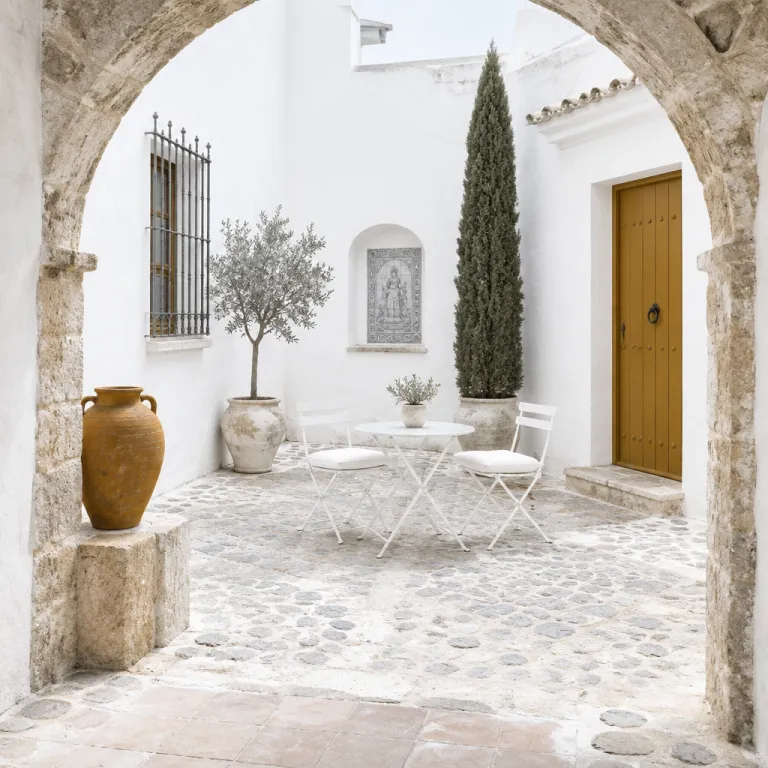
Luxury travel in Vejer de la Frontera, Spain
Why Vejer de la Frontera, Spain is ideal for luxury travellers
Perched on a hill in the province of Cádiz, Vejer de la Frontera, Spain feels like a white marble sculpture carved against the sky. The town combines Moorish heritage, Atlantic light, and refined hospitality, which makes it one of the best bases for a cultured trip through southern Spain. From the first stroll along its streets to the last sunset over the surrounding hills, Vejer offers a rare balance of serenity and sophistication.
Luxury travellers usually arrive with a clear planning trip in mind, yet Vejer quickly invites a slower rhythm. You can walk from your hotel to the old city walls in minutes, then continue towards the historic Arco de Segur and the Arco de la Villa (also known as Arco de Sancho IV) without ever needing a car. This compact scale means that every day in the town can include both relaxed hotel time and meaningful visits to historical places in Vejer and across the wider province of Cádiz.
For guests comparing Andalusian destinations, Vejer de la Frontera stands out for its layered history and intimate atmosphere. The town is close enough to the Atlantic beaches and to Cádiz city for easy day trips, while remaining quiet once the day visitors leave. If you are planning a longer trip through Andalucía, Vejer de la Frontera, Spain works beautifully as a central hub between Jerez, Tarifa, and the white villages of the interior.
Choosing the right area of town for your stay
Most luxury and premium hotels cluster around the upper historic town, near Plaza de España and the remains of the city walls. Staying here places you within a short walk of the main historical sites, the Jewish quarter, and many of the best bars and restaurants. It also means that your room is more likely to open a window onto sweeping views of the surrounding countryside and the distant Atlantic.
Guests who prefer quieter nights sometimes choose elegant casas on the edges of Vejer de la Frontera, where streets are wider and parking is easier. From these areas, you can still reach the central plaza and the atmospheric Calle José Castrillón or Calle de la Corredera in less than ten minutes on foot. When you book, always check whether your room faces an inner patio or the open landscape, because both options offer very different kinds of views and ambience.
For travellers focused on gastronomy, staying near Plaza de España or the San Francisco quarter is particularly practical. Many of the town’s most acclaimed bars and restaurants cluster around these squares and along the surrounding streets. This location allows you to enjoy long dinners with local sherry and then walk back to your hotel through softly lit alleys that still echo with centuries of history.
Sleeping in history: Vejer’s city walls, arches, and noble houses
One of the main reasons luxury travellers choose Vejer de la Frontera, Spain is the chance to sleep within centuries-old architecture. Many premium properties occupy former noble houses or traditional casas del pueblo, where thick walls keep interiors cool and courtyards are filled with jasmine. When a restored casa del hidalgo or a former palace becomes a hotel, guests gain direct access to the town’s architectural story.
Walking from your hotel to the city walls at sunrise is an experience that feels both intimate and grand. You pass under the Arco de Segur, continue through the Arco de la Villa, and soon reach viewpoints where the landscape opens like a painted backdrop. These routes are short in distance yet long in history, and they allow you to enjoy the town before the day visitors arrive from other parts of Spain.
Many travellers highly recommend choosing a room that looks towards the old fortress or the white cascade of houses that descends from Plaza de España. From here, the views change with every hour of the day, from soft morning mist to golden evening light. If you are comparing options across Andalusia, this is where Vejer de la Frontera often feels more atmospheric than larger towns with heavier traffic and less walkable historic centres.
Heritage hotels and how to evaluate them
When you evaluate a luxury property in Vejer, pay attention to how it integrates original features such as arches, patios, and stone staircases. Some of the most characterful addresses sit close to the old Jewish quarter, where narrow streets curve around the remains of medieval houses. Others occupy positions near the former castle, where the city walls once protected the frontier between Christian and Muslim territories.
For travellers interested in how Andalusia converts its heritage into refined stays, a detailed article on transforming Moorish fortresses into five star hotels offers useful context. It explains how historic regulations, architectural conservation, and modern comfort can coexist in a single property. Reading this kind of travel guide before booking helps you find hotels that respect the spirit of Vejer while still offering contemporary luxury.
In Vejer de la Frontera, Spain, many premium hotels also collaborate with local artisans for tiles, textiles, and furniture. This approach keeps the town’s craft traditions alive and gives each room a sense of place that generic design cannot match. When you read travel guides or guest reviews, look for mentions of hand painted ceramics, carved wooden doors, and restored stone arches such as the Arco de Segur or the Arco de la Villa near the former defensive line.
Key historical sites around Vejer de la Frontera, Spain
Beyond the comfort of your hotel, Vejer offers a compact yet rich collection of historical sites. The parish church of Divino Salvador stands on the highest point of the town, built over an earlier mosque and blending Gothic and Mudejar elements. From its terrace, the views stretch across the province of Cádiz, and on clear days you can trace the old frontier lines that once defined this landscape.
Another focal point is Plaza de España, often called the “plaza de los pescaditos” because of its tiled fountain decorated with fish. This plaza acts as the social heart of Vejer de la Frontera, where locals meet, children play, and visitors pause between visits to nearby monuments. Around the square, you will find several of the best bars and restaurants, many of which occupy former casas del pueblo with arches that open windows onto inner patios.
From Plaza de España, a short walk along winding streets leads to the remains of the castle and the most complete sections of the city walls. Here, the town’s role as a frontier stronghold becomes tangible, especially near the fortified gates such as Arco de Segur and the Arco de la Villa that once controlled access. These structures date back several centuries and form a natural route for a half day visit focused on history and architecture.
Historic stays and Andalusia’s parador model
Travellers who enjoy Vejer’s historic ambience often appreciate the broader network of Parador hotels across Spain. These state run properties occupy castles, monasteries, and palaces, offering a structured way to sleep in history while maintaining consistent service standards. While Vejer de la Frontera, Spain does not currently host a Parador, several lie within a comfortable drive, which makes the town a convenient base for exploring them.
If you are considering a route that combines Vejer with other heritage stays, a specialised article on sleeping in history in Andalusia’s Parador hotels provides a clear overview. It explains which properties suit couples, families, or solo travellers, and how to structure a multi stop itinerary. Using such a travel guide alongside local information from Vejer helps you plan a coherent trip that balances driving times, check in schedules, and meaningful visits.
Many guests choose to spend several nights in Vejer de la Frontera and then add one or two nights in a Parador elsewhere in the province of Cádiz. This combination allows you to enjoy the intimate scale of Vejer’s streets and plazas while also experiencing grander historic complexes. When you compare options, consider how each stay contributes to your overall sense of place rather than treating hotels as interchangeable beds for the night.
Walking routes: arches, plazas, and the Jewish quarter
One of the most rewarding ways to experience Vejer de la Frontera, Spain is to follow a simple walking route that links its main historical points. Start at Plaza de España, then continue along Calle de la Corredera, where balconies open windows towards the surrounding hills and the distant Atlantic. From here, narrow side streets lead you back into the dense fabric of the old town, where every corner seems to reveal a new arch or hidden patio.
As you walk, you will pass through the Arco de Segur, one of the principal gates in the old city walls. This arch once marked the transition between the safer interior and the exposed frontier, and it still frames some of the best views in Vejer. A little further on, the Arco de la Villa, dedicated to Sancho IV, offers another photogenic passage, especially in the late afternoon when the light softens the stone.
The former Jewish quarter lies close to these arches, a compact area of intertwined streets and small plazas. Here, the town’s layered history becomes particularly clear, with Christian, Muslim, and Jewish influences visible in the layout of houses and the orientation of streets. Many travel guides highlight this quarter as a must see area, and I highly recommend including it in any day visit or longer stay.
Plazas and everyday life
Beyond Plaza de España, several smaller squares structure daily life in Vejer de la Frontera. The San Francisco area, for example, combines historic façades with a lively selection of bars and restaurants that stay open late into the evening. This is an excellent place to enjoy local tapas and sherry before walking back through the quiet streets to your hotel.
Another atmospheric corner is the area around Puerta Cerrada, a former closed gate that once formed part of the defensive ring. Today, the name survives while the gate itself has softened into the urban fabric, surrounded by whitewashed houses and climbing plants. From here, you can follow narrow alleys that eventually bring you back to the main plaza or towards the church of Divino Salvador.
For travellers who like to structure their trip with clear routes, many hotels provide simple printed maps that mark arches, plazas, and viewpoints. These maps often highlight places in Vejer that are easy to miss, such as small miradores where a single bench offers wide views over the province of Cádiz. Using them alongside more detailed travel guides allows you to balance spontaneous wandering with targeted visits.
Gastronomy and atmospheric evenings in Vejer de la Frontera
After a day of visits, Vejer de la Frontera, Spain reveals another side of its character through gastronomy. The town has built a strong reputation for creative Andalusian cuisine, with chefs who reinterpret local products such as retinto beef, almadraba tuna, and payoyo cheese. Many of the best tables sit within restored casas del pueblo, where arches and patios create intimate dining rooms.
The San Francisco quarter and the streets around Plaza de España form the main gastronomic axis of Vejer de la Frontera. Here, you will find a mix of traditional taverns, contemporary restaurants, and wine bars that specialise in sherries from nearby Jerez. Some properties, such as the historic complex around La Casa del Califa hotel and restaurant, integrate accommodation, bars, and dining rooms in a single ensemble that feels like a small world within the town.
When you plan your trip, consider booking at least one special dinner in advance, especially during weekends and local festivals. Many travellers highly recommend timing their meal so that they can enjoy a drink at sunset on a terrace with views over the surrounding hills. After dinner, a slow walk back through the quiet streets, passing under arches such as Arco de Segur or the Arco de la Villa, becomes one of the most memorable parts of the day.
Sherry, wine, and regional flavours
Vejer’s location within the province of Cádiz makes it an excellent base for exploring the sherry triangle of Jerez, El Puerto de Santa María, and Sanlúcar de Barrameda. Many bars and restaurants in town curate thoughtful lists of local wines, allowing you to taste different styles without leaving Vejer. If you wish to go deeper, a specialised article on where to stay for the Jerez vendimia festival can help you extend your trip towards the vineyards.
During a longer stay in Vejer de la Frontera, Spain, you can easily plan a day visit to Jerez for bodega tours and then return to the calm of the hilltop town. This combination of urban wine culture and rural tranquillity is one of the region’s main strengths. It also means that your hotel in Vejer becomes more than a place to sleep; it turns into a refined base for a wider exploration of Andalusian flavours.
Many travel guides now include detailed sections on Cádiz province gastronomy, and they often mention Vejer as a highlight. When you read these travel guides, pay attention to how they describe specific streets, plazas, and quarters, because this helps you find the most atmospheric spots. In practice, the best experiences usually happen in small places Vejer locals favour, where a simple plate of grilled fish or seasonal vegetables can feel as luxurious as any elaborate tasting menu.
Planning your stay: practical tips for premium bookings
When you plan a stay in Vejer de la Frontera, Spain, start by defining how many days you wish to dedicate to the town itself. Two full days allow you to explore the main historical sites, enjoy several meals, and still have time to relax in your hotel. A longer trip of four or five nights gives you space for day visits to Cádiz, Jerez, or the Atlantic beaches while keeping Vejer as your calm base.
For luxury and premium bookings, room selection matters as much as the property. Always check whether your room opens a window towards the landscape, an inner patio, or a narrow street, because each option creates a different experience. If you value quiet nights, ask for rooms away from busy bars and restaurants, especially near San Francisco and Plaza de España, where evenings can be lively.
Parking is another practical point in this hilltop town. Some high end hotels offer private parking or valet services, which can be very useful if you plan to explore the wider province of Cádiz by car. When you compare options, consider whether you prefer to stay inside the old city walls, where access is more restricted, or just outside, where driving and parking are easier.
Using travel guides and online resources wisely
Modern travellers often rely on a mix of printed travel guides, online reviews, and specialist articles to plan their stays. For Vejer de la Frontera, this combination works particularly well, because the town is compact yet full of small details that generalist guides sometimes miss. Look for resources that mention specific arches such as Arco de Segur, plazas like Plaza de España, and landmarks including Divino Salvador, because this indicates first hand knowledge.
When you read travel guides or blogs, pay attention to how they describe the rhythm of the day in Vejer. Some visitors prefer to spend mornings exploring the streets and historical sites, then escape to the nearby coast during the hottest hours before returning for dinner. Others enjoy staying in town all day, using the cooler interiors of their hotel or a shaded café near Puerta Cerrada as a refuge during midday.
For premium bookings, consider contacting your chosen hotel directly once you have narrowed your options. Staff can often suggest the best room categories for your needs, explain access to the old town, and recommend specific places in Vejer that match your interests. This direct communication, combined with careful reading of trusted travel guides, usually leads to a smoother and more satisfying trip.
Day trips and wider context around Vejer de la Frontera, Spain
While Vejer itself offers plenty to fill several days, its position within the province of Cádiz makes it an excellent base for wider exploration. A short drive brings you to the Atlantic beaches of El Palmar and Zahora, where long stretches of sand contrast with the compact streets of the hilltop town. Another easy day visit leads to Cádiz city, whose layered history and oceanfront setting complement the inland perspective of Vejer.
Travellers interested in wine and equestrian culture can plan a day trip to Jerez de la Frontera. From your hotel in Vejer de la Frontera, the drive is straightforward, and you can return in time for a late dinner in one of the town’s bars and restaurants. This pattern of daytime excursions and evening returns makes Vejer feel like a calm anchor in a varied Andalusian itinerary.
For those who enjoy exploring other white villages, places in Vejer’s orbit include Medina Sidonia, Arcos de la Frontera, and Conil de la Frontera. Each town offers its own mix of streets, plazas, and views, yet Vejer often feels the most polished choice for a luxury base. By the end of such a trip, many guests highly recommend Vejer de la Frontera, Spain to friends who value both comfort and cultural depth.
Balancing rest and exploration
When you design your itinerary, try to alternate more active days with quieter ones centred on Vejer itself. A morning visit to Divino Salvador and the city walls, followed by a long lunch near Plaza de España and a restful afternoon in your hotel, can be as rewarding as any excursion. On other days, you might drive to Cádiz or Jerez, then return to stroll under the Arco de la Villa and along the softly lit streets before dinner.
Many travellers find that three to five nights in Vejer de la Frontera strike the right balance between depth and variety. This duration allows you to explore the town’s historical layers, enjoy several gastronomic experiences, and still include at least one or two day trips. Throughout, your hotel remains a constant reference point, a place where each evening opens a window onto the quiet beauty of the town.
As you refine your planning trip, remember that Vejer rewards both careful preparation and spontaneous wandering. Use travel guides to structure your days, but leave space for unplanned pauses in small plazas or under arches such as Arco de Segur. In the end, the most lasting memories often come from simple moments: a view from a terrace, a conversation with a local, or the sound of footsteps on ancient stone.
Key figures for luxury travel in Vejer and Cádiz province
- The province of Cádiz welcomes several million visitors each year, with a growing share choosing inland towns like Vejer de la Frontera, Spain for cultural stays, according to data from the regional tourism board of Andalucía and Spain’s national tourism statistics.
- Average driving time between Vejer de la Frontera and Cádiz city is around 45 minutes for a distance of roughly 55 kilometres, which makes day visits easy while still allowing guests to sleep in the quieter hilltop town.
- Jerez de la Frontera, located about 70 kilometres from Vejer, concentrates the majority of sherry bodegas open to visitors, which is why many premium travellers base themselves in Vejer and plan at least one dedicated day trip to Jerez.
- Surveys by Spanish tourism authorities indicate that travellers who stay in historic towns such as Vejer tend to spend more per day on accommodation and gastronomy than coastal day trippers, reflecting the premium positioning of these destinations.
- The white villages route, which includes Vejer and several other hilltop towns, is one of the most popular cultural itineraries in Andalusia, often recommended in international travel guides for its combination of history, architecture, and landscape.
FAQ about staying in Vejer de la Frontera, Spain
How many days should I stay in Vejer for a comfortable trip?
For a balanced experience, plan at least two full days in Vejer de la Frontera, Spain. This allows time to explore the main historical sites, enjoy several meals, and still relax in your hotel. Travellers who want to include day trips to Cádiz or Jerez often choose three to five nights.
Is it better to stay inside the old town or outside the city walls?
Staying inside the old town places you close to arches such as Arco de Segur, Plaza de España, and the Jewish quarter, which is ideal if you value atmosphere and walkability. However, access by car and parking can be more complicated within the city walls. Properties just outside the historic core usually offer easier parking and slightly quieter nights while remaining within walking distance of the main streets.
Do I need a car to enjoy Vejer and the surrounding area?
Within Vejer de la Frontera itself, you can comfortably explore on foot, because the town is compact and most sites lie close together. A car becomes useful if you plan day trips to Cádiz, Jerez, or the Atlantic beaches, as public transport connections can be limited or infrequent. Many luxury travellers choose to rent a car for flexibility while relying on walking once they are in town.
Which historical sites are essential for a first visit?
For a first visit, prioritise the church of Divino Salvador, Plaza de España, the main sections of the city walls, and the arches such as Arco de Segur and the Arco de la Villa. Include time to wander through the former Jewish quarter, where the layout of the streets reflects centuries of layered history. These sites can all be visited comfortably in one or two days, leaving space for relaxed meals and terrace time.
When is the best time of year to book a luxury stay in Vejer?
The most pleasant periods for a luxury stay in Vejer de la Frontera, Spain are usually spring and autumn, when temperatures are mild and the town is less crowded than in peak summer. During these seasons, you can walk the streets comfortably during the day and enjoy terraces in the evening. If you plan to visit during major festivals in Cádiz or Jerez, book well in advance, as demand for premium rooms increases significantly.