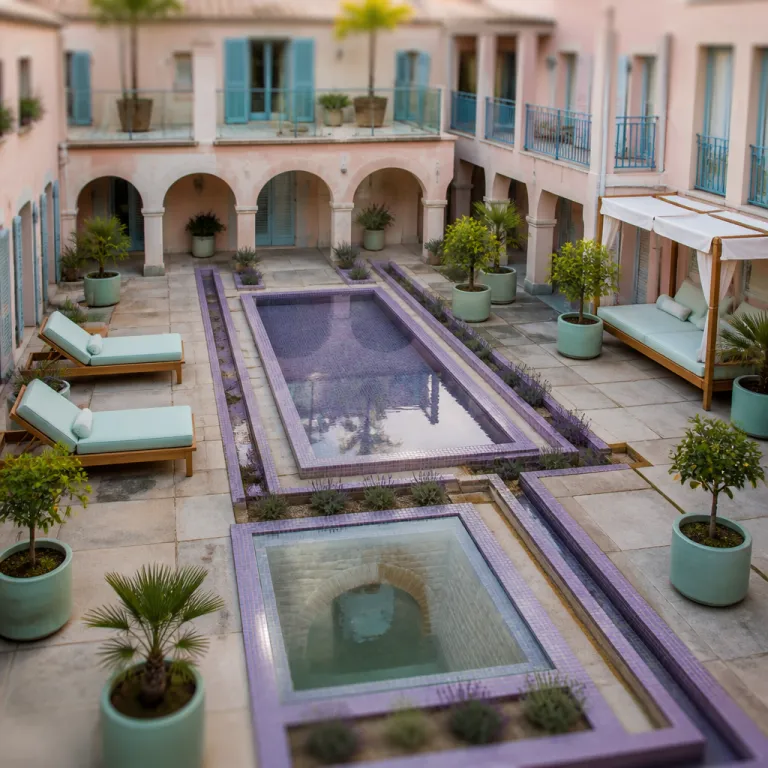
How moorish water thinking still shapes luxury stays in Andalusia
Step into the courtyards of the finest moorish water architecture Andalusia hotels and the first thing you register is sound. A thin sheet of water slides along stone channels, softening the heat while the architecture quietly directs breezes through arches and shaded galleries. In this region of southern Spain, water is not decoration but structure, and the most refined hotels understand that every ripple and reflection is part of the architectural story.
What we call moorish architecture in Andalusia grew from a precise response to climate, scarcity and urban density in each city. From Granada to Córdoba and Málaga, Islamic engineers built palace complexes, mosques and domestic structures where water cooled, cleaned and calmed, long before air conditioning defined comfort. That legacy now guides modern hotel architects who want their properties in Spain to feel both authentically Spanish and technically advanced, rather than themed or theatrical.
Historical moorish engineers were not stylists but problem solvers, and their influence on today’s moorish water architecture Andalusia hotels is quietly radical. They brought techniques from North Africa, from present day Algeria and Tunisia, and adapted them to the great cities of Al Andalus across several centuries. Their Islamic architecture used acequias, aljibes and intricate water structures as seriously as walls and roofs, and the best preserved examples still teach modern hotel architects how to balance culture, climate and luxury.
From palace courtyards to hotel atriums: water as living architecture
To understand the moorish water architecture Andalusia hotels draw on, start with the great palace complexes that defined Islamic architecture in Spain. The Alhambra Granada, the Alcázar of Seville and the remains of Madinat Zahra near Córdoba were built as self contained cities, where every courtyard, prayer hall and garden used water as a structural element. Their architectural styles were not just visual; they were climatic systems that turned harsh summers into something almost theatrical.
In the Alhambra Granada, long reflecting pools double as cooling devices, while narrow channels cut through marble floors to move water silently between spaces. The red and white arches of the Mezquita of Córdoba, later the mosque of Córdoba and now the cathedral, frame a forest of columns where the great mosque once integrated fountains and basins into its prayer hall for ritual and refreshment. These Islamic structures show how an architectural style can make water the protagonist, not a background feature, and modern hotel architects study them closely.
Contemporary properties reinterpret this heritage with varying degrees of subtlety, especially those that lean into minimalist architecture in rural estates. Some, like the Alhambra Palace Hotel in Granada or urban conversions near the Alcázar of Seville, echo horseshoe arch motifs and geometric patterns in their courtyards while hiding advanced plumbing behind historic stone. Others, such as the rural retreats explored in this guide to how minimalist architecture is reshaping Andalusia’s rural hotel scene, use slender channels, shallow pools and shaded loggias to create a moorish atmosphere without pastiche.
Acequias, aljibes and the quiet technology behind cool courtyards
The real genius behind moorish water architecture Andalusia hotels emulate lies in the invisible systems, not the postcard fountains. Acequias, the irrigation channels that still lace the Alpujarras above Granada, carry mountain water for kilometres with minimal loss, feeding terraces, orchards and village cisterns. Aljibes, the underground cisterns built beneath houses and city squares, store rainwater and spring water, stabilising supply in a period when drought was a constant threat.
Modern hotel architects in Andalusia borrow these Islamic engineering principles to reduce energy use while elevating guest comfort. Narrow water channels along shaded walkways create evaporative cooling, while deep courtyards with high walls trap cooler night air for the following day. In luxury properties from Málaga to Jerez de la Frontera, you will see reflecting pools aligned with arches and colonnades, not only for aesthetics but to temper heat and regulate humidity in a way that feels almost effortless.
Dataset research on historical practice notes that “Moorish architecture emphasized water for cooling and aesthetics.” That same logic now underpins sustainable design in high end Spanish hotels, where water features are calibrated as part of the building’s thermal strategy rather than added as decorative afterthoughts. When you choose a room facing an internal courtyard instead of the street, you are choosing a microclimate shaped by centuries of Islamic architecture, not just a pretty view.
Where to stay: hotels that honour moorish water legacies
Some properties in Andalusia treat moorish references as surface styling, while a smaller group builds its entire guest experience around water informed architecture. In Granada, the Alhambra Palace Hotel sits just below the palace complex, with terraces that frame the city and subtle water features that echo the Islamic structures above without copying them. Here, the architectural style uses slender channels and small basins to cool outdoor lounges, so an evening drink feels like part of the palace narrative rather than an afterthought.
In inland Granada province, Barceló La Bobadilla near Loja operates almost as a contemporary village, with whitewashed structures, shaded courtyards and a network of pools and rills. Its design borrows from moorish architecture and from the great mosque courtyards of Córdoba and Seville, using water to separate quiet zones from livelier terraces. The result is a property where you can move from a calm, almost monastic prayer hall like spa to a vibrant pool deck, guided by the sound of running water rather than signage.
On the Costa del Sol, Finca Cortesin near Casares offers a more modern interpretation of Islamic architecture, with geometric patterns in tiles, long axial pools and carefully framed views towards the sea. Here, water features are integrated into both the spa and the gardens, creating a sequence of spaces that feel more like a palace garden than a resort. If you plan a circuit through Málaga, Jerez de la Frontera and Córdoba, combining such hotels with visits to the Alcázar of Seville, the Mezquita of Córdoba and the ruins of Madinat Zahra will give you a layered understanding of how moorish engineering still shapes Spanish hospitality.
Water, culture and the sensory script of an Andalusian stay
Choosing among moorish water architecture Andalusia hotels is ultimately about deciding what kind of sensory script you want for your trip. In the historic cores of Granada, Córdoba and Seville, the tight weave of streets means that internal courtyards with fountains and channels become your private climate, filtering city noise into a low murmur. The sound of water in these spaces is not background music; it is the acoustic architecture that tells your body it can finally slow down.
In coastal cities such as Málaga or Cádiz, where sea breezes already cool the air, hotels often use water features to frame views and connect guests to local culture. A courtyard fountain becomes the prelude to an evening of tapas, sherry and fried fish, especially if you follow a stay with this guide to eating in Cádiz, from salt and seaweed to the lightest fried fish in Spain. Inland, near Jerez de la Frontera or in the white villages above the Costa del Sol, pools and rills often trace the lines of former acequias, reminding guests that every drop is part of a longer story of scarcity and ingenuity.
For couples planning a romantic itinerary, paying attention to water is as important as choosing the right mattress or view. Ask how a hotel’s courtyards are oriented, whether rooms face internal gardens or busy streets, and how pools and fountains are integrated into daily life rather than staged only for photographs. The most rewarding moorish inspired properties in Spain use Islamic architecture, horseshoe arches, geometric patterns and carefully scaled water structures to create a sense of privacy and calm that feels both deeply Andalusian and quietly contemporary.
FAQ
What is moorish architecture in Andalusia and why does it matter for hotels ?
Moorish architecture in Andalusia refers to the Islamic architectural styles developed under Muslim rule, characterised by horseshoe arches, intricate geometric patterns and a sophisticated use of water. These architectural styles matter for hotels because they offer proven strategies for cooling, shading and creating acoustic calm in hot cities. When a property in Granada, Córdoba or Málaga uses courtyards, channels and fountains intelligently, it is applying centuries of moorish engineering to modern comfort.
How does moorish water management influence modern hotel design ?
Moorish water management influences modern hotels through the use of courtyards, fountains, acequias and cistern inspired systems that reduce reliance on mechanical cooling. Designers study historic sites such as the Alhambra Granada, the Mezquita of Córdoba and the Alcázar of Seville to understand how water structures shaped climate and circulation. Many luxury properties now integrate reflecting pools, narrow channels and shaded basins as part of their environmental strategy, not just as decorative features.
Which Andalusian cities are best for experiencing this architectural heritage in hotels ?
Granada, Córdoba and Seville are the primary cities where moorish and Islamic architecture directly inform hotel design. In Granada, proximity to the Alhambra Granada and the acequia systems of the Alpujarras gives properties a strong water focused narrative. Córdoba offers the great mosque complex and Madinat Zahra as references, while Seville adds the Alcázar and its gardens, and Málaga and Jerez de la Frontera provide coastal and rural interpretations of the same heritage.
How can I tell if a hotel uses water as real architecture rather than decoration ?
Look for how water is integrated into circulation, temperature control and privacy, rather than only appearing as a central pool or lobby fountain. If courtyards are shaded, with narrow channels along walkways and small basins near seating, the water is likely part of a climatic strategy. Hotels that reference acequias, aljibes or traditional Islamic architecture in their descriptions usually take these systems seriously, especially when they explain how they reduce energy use and enhance guest comfort.
Why are historic moorish water systems relevant for sustainable luxury today ?
Historic moorish water systems were designed for a climate of scarcity, making every drop count through careful storage, distribution and cooling. Those principles align closely with contemporary sustainability goals in luxury hospitality, where reducing energy consumption and water waste is increasingly non negotiable. By adapting acequias, cisterns and courtyard based cooling to modern materials and regulations, hotel architects in Spain can offer high comfort while honouring both culture and environmental responsibility.